
Paving Materials & Base Layers
Learn how aggregate selection, base thickness, asphalt mix and drainage work together in a pavement system.
Browse related pages
Learn how aggregate selection, base thickness, asphalt mix and drainage work together in a pavement system.
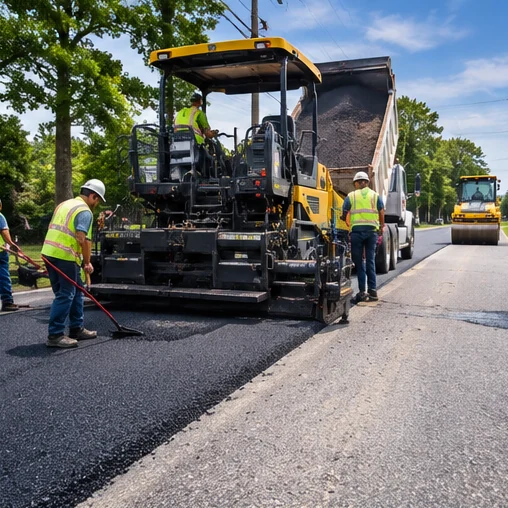
Asphalt Paving
Understand the sequence of preparing, placing and compacting asphalt for a smooth working surface.
READ MORE ↗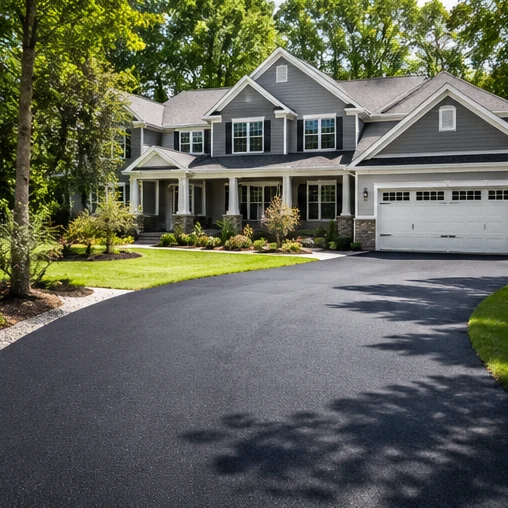
Driveway Paving
Plan an asphalt driveway that fits vehicle movement, the entrance grade and the home landscape.
READ MORE ↗Residential Paving
Explore practical paving considerations for private drives, access lanes and other home surfaces.
READ MORE ↗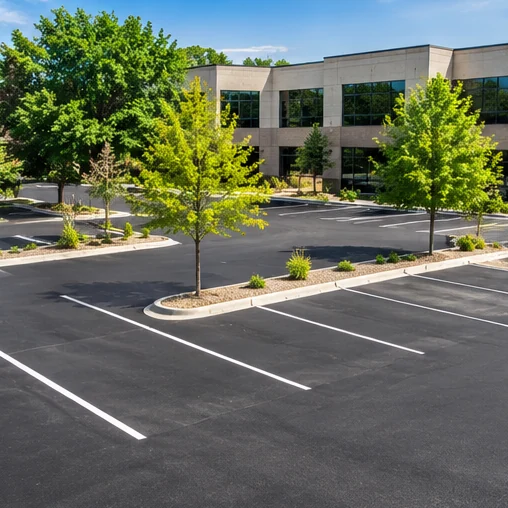
Commercial Paving
Commercial paved areas call for appropriate loading, circulation, access and maintenance planning.
READ MORE ↗Parking Lot Paving
A parking lot benefits from thoughtful grading, maneuvering space, accessible routes and reliable drainage.
READ MORE ↗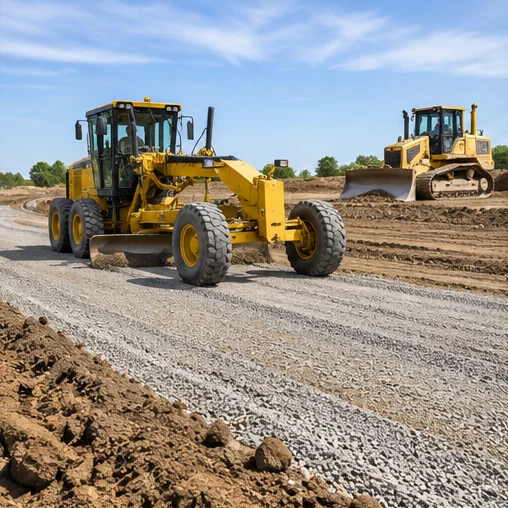
Grading Services
Grading shapes a surface to support paving, manage water and create consistent working elevations.
READ MORE ↗Driveway Grading
A gravel or asphalt driveway starts with controlled slope and a stable, well-shaped base.
READ MORE ↗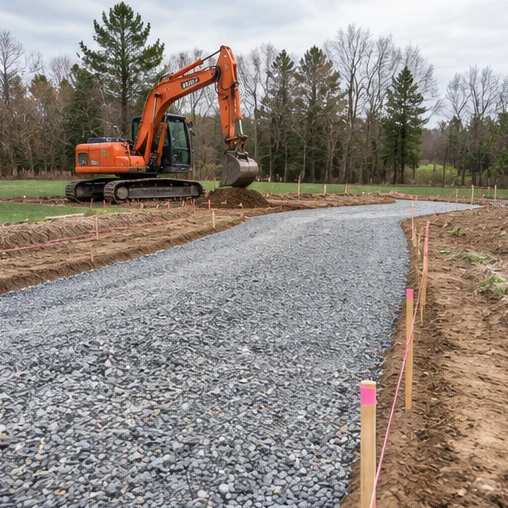
Rough Grading
Rough grading establishes broader site elevations before fine finish work and pavement construction.
READ MORE ↗Finish Grading
Fine grading refines elevations, smoothness and drainage just before the next construction layer.
READ MORE ↗Site Preparation
Site preparation includes reviewing ground conditions, access, drainage and material handling.
READ MORE ↗Excavation & Earthwork
Earthwork shapes a site by removing or redistributing soil and aggregate to meet a project plan.
READ MORE ↗Gravel Driveways
A gravel drive requires a suitable base, adequate crown or crossfall and periodic grading.
READ MORE ↗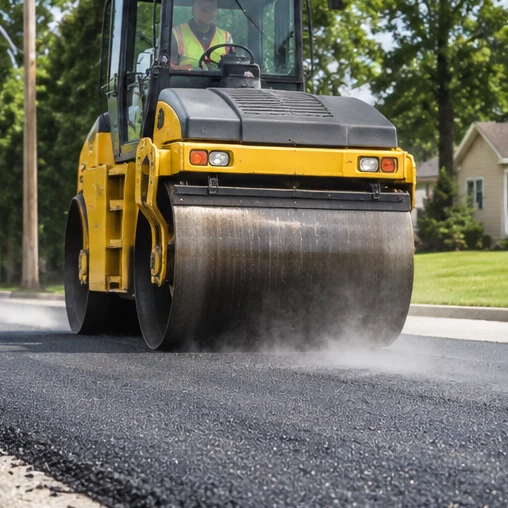
Asphalt Repair
Repair decisions depend on the depth, location and underlying cause of pavement deterioration.
READ MORE ↗Pothole Repair
Potholes should be evaluated for water entry and base failure, not simply covered at the surface.
READ MORE ↗Crack Sealing
Sealing appropriate cracks can help limit water intrusion into asphalt and underlying layers.
READ MORE ↗Asphalt Sealcoating
Sealcoating can refresh and protect sound asphalt when preparation and weather conditions are suitable.
READ MORE ↗Asphalt Resurfacing
An overlay can renew certain existing pavements, provided the structural base and drainage are suitable.
READ MORE ↗Asphalt Overlay
An asphalt overlay adds a new surface course over an existing pavement after appropriate assessment.
READ MORE ↗Asphalt Milling
Milling removes selected asphalt layers to restore grades or prepare a surface for an overlay.
READ MORE ↗Drainage & Surface Water
Water management is essential to both paved surfaces and surrounding landscapes.
READ MORE ↗Driveway Drainage
Driveway slopes and transitions should guide runoff away from structures while keeping safe vehicle access.
READ MORE ↗Aggregate Base Preparation
The granular base spreads loads and provides a consistent platform for asphalt surfacing.
READ MORE ↗Soil & Base Compaction
Compaction helps reduce later settlement by improving consistency within fill and base layers.
READ MORE ↗Parking Lot Striping
Striping creates legible parking, directional flow and designated access spaces after pavement work.
READ MORE ↗